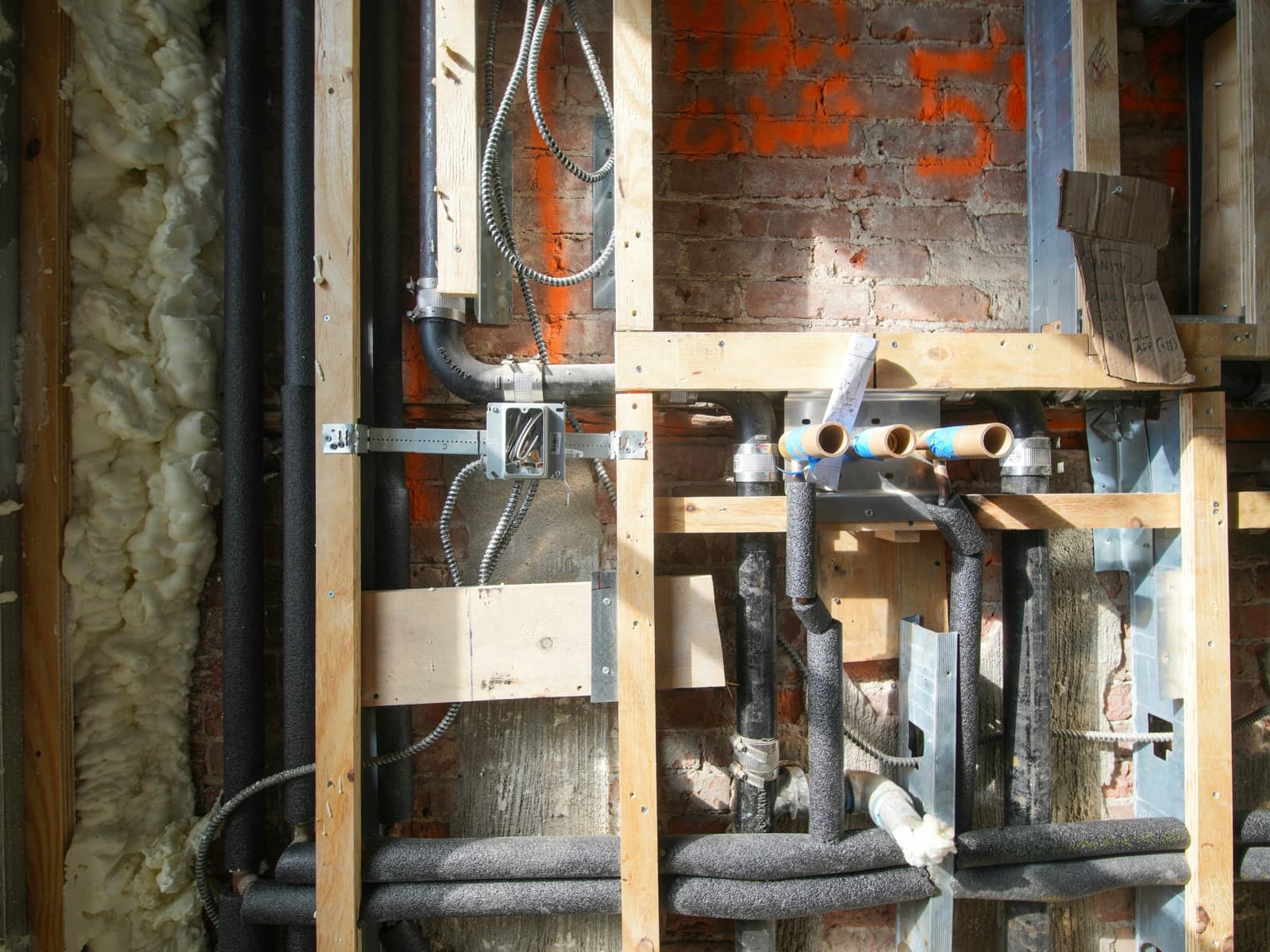
When patching stops making sense
One pinhole leak is a repair. A second and third in the same system tells you the pipe itself is wearing out. Galvanized steel rusts from the inside until water pressure drops to a trickle, and older copper can thin until leaks keep showing up in new places.
Repiping replaces the supply lines throughout the house so you stop chasing the next leak.
Signs it's time to repipe
- Weak pressure at several fixtures, not just one
- Brown or rusty water after the tap sits
- Two or more leaks in the last few years
- Galvanized pipe visible under sinks or at the heater
How a repipe works
Walkthrough and plan
We trace the existing lines, choose PEX or copper with you, and map where small openings are needed.
New lines installed
Most homes are repiped in a few days, with water restored at the end of each work day.
Patch and inspect
Access openings are closed, the system is pressure tested and the permit inspection is completed.
Repiping older Yuba City homes
Homes built before the 1970s in Yuba City and Marysville often still have galvanized supply pipe somewhere in the system, even if part of it was replaced. A partial fix leaves the old sections to keep rusting and clogging the new ones.
Most single-story ranch homes in the area have attic access, which makes running new lines overhead straightforward and keeps wall openings small.
Repiping questions
PEX or copper: which is better?
Both last. PEX costs less, installs with fewer openings and resists freezing. Copper is a good fit when you want to match existing exposed lines.
Can we stay in the house during a repipe?
Yes. Water is off only while we work, and we restore it every evening.
Do you patch the drywall?
We close all access openings. Final texture and paint can be included or left to your painter.